Executing a major residential roof replacement or structural overhead renovation is one of the most significant engineering endeavors a homeowner will undertake. The roof assembly functions as a dynamic structural system, engineered to bear immense dead loads from heavy building materials alongside variable live loads from wind pressure, heavy snowfall, and maintenance crews. However, because overhead construction involves high-elevation work, heavy material hoisting, structural tear-offs, and continuous exposure to weather elements, roofing projects carry inherent safety risks. Unvetted labor, poor site containment, uninspected sub-floor decking, and ignored fall-protection standards can rapidly lead to catastrophic structural collapse, serious worker injury, property damage, and severe legal liability for property owners.
Mitigating physical hazards and engineering risks requires looking beyond simple price estimates when planning an overhead project. Achieving a successful, zero-incident construction outcome depends on rigorous front-end contractor vetting, comprehensive site preparation, and thorough structural load analysis before a single shingle is removed. Proper site preparation involves establishing clear pedestrian drop zones, protecting delicate property hardscapes, securing high-voltage power lines, and verifying that roof trusses and plywood sheathing can handle concentrated material loads. Implementing strict safety protocols transforms a high-risk construction zone into a controlled, efficient engineering site that protects both field crews and household occupants.
Evaluating Regional Enterprises for High-Standard Site Safety
Selecting an enterprise to lead an overhead construction project requires verifying that the firm maintains a culture of safety alongside technical craftsmanship. Unverified out-of-town contractors or low-bid operations often cut corners on safety equipment, lack active workers’ compensation insurance, and ignore municipal building codes, leaving property owners exposed to immense financial and legal liability if a site accident occurs.
Partnering with an established local roofing company guarantees that your construction project is managed by a licensed, fully insured business with deep roots in your community. Reputable regional enterprises carry comprehensive general liability insurance, maintain active workers’ compensation coverage for all field personnel, and possess complete familiarity with local municipal permit requirements and regional wind-uplift codes. Their physical presence ensures dedicated site supervision, transparent communication, and immediate accountability throughout every phase of construction.
Working with a vetted regional enterprise protects property owners against contractor default and substandard safety practices. Established firms provide clear, written contracts detailing safety protocols, material delivery logistics, and manufacturer warranty coverage transparently. Thorough enterprise evaluation establishes a safe, professional foundation for your overhead construction project.
Coordinating Comprehensive Protection Across Construction Phases
A residential roof replacement transforms a quiet private property into an active construction zone overnight. Dropping heavy, tear-off debris from roof perimeters poses severe risks to underlying gutters, glass windows, air conditioning units, landscaping beds, and family members walking near the house.
Contracting a certified residential roofing company ensures that your job site undergoes systematic preparation and risk mitigation before structural demolition begins. Qualified project managers install heavy-duty plywood shielding over exterior AC units and glass windows, erect magnetic perimeter catch zones to collect stray nails, and lay protective tarps across driveways and garden beds. Their logistical planning establishes designated material staging areas that prevent lawn compaction and property destruction during heavy material deliveries.
Relying on a professional residential firm guarantees that site safety measures remain active throughout the teardown, structural repair, and material installation phases. Clear safety perimeters prevent unauthorized access to high-hazard drop zones, keeping household members and pets safe. Comprehensive site management preserves property integrity while construction crews work overhead.
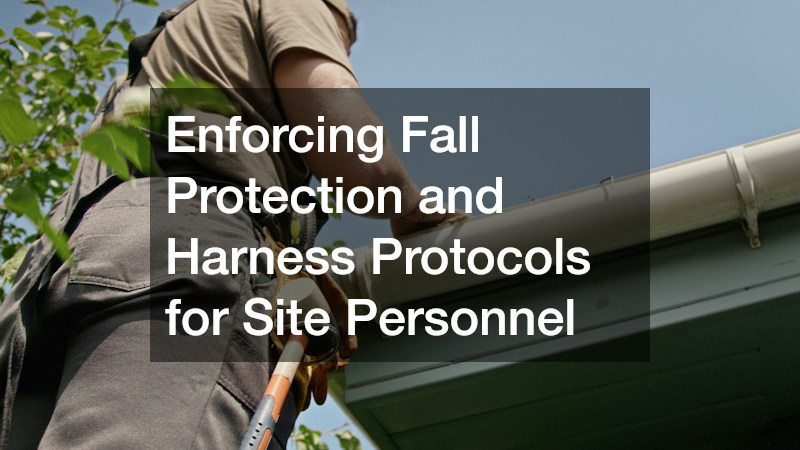
Enforcing Fall Protection and Harness Protocols for Site Personnel
High-elevation work on steep roof slopes inherently carries significant physical fall risks. Allowing field workers to navigate steep roof planes without anchored personal fall arrest systems, secure guardrails, or proper footwear creates extreme safety hazards and violates federal OSHA construction standards.
Verifying that all roofers on your job site utilize full-body safety harnesses, shock-absorbing lanyards, and securely anchored roof ridge fall lines is essential for preventing catastrophic site injuries. Master trade crews set up certified safety anchor points along roof ridges before initiating tear-off work, ensuring every worker remains continuously tethered while working near roof edges or steep valleys. Clean, organized roof decks prevent tripping hazards caused by scattered tools, loose underlayments, or power cords.
Enforcing strict fall protection standards safeguards human life while protecting property owners from costly site injury lawsuits. Vetted trade crews participate in daily safety tool-box talks, wear OSHA-approved hard hats and non-slip boots, and adhere strictly to ladder tie-off procedures. Rigorous personal safety compliance ensures an efficient, incident-free construction process.
Contracting Certified Specialists for Code-Compliant Overhead Work
Complex architectural roof profiles—featuring dormers, chimneys, valleys, and low-slope additions—demand specialized technical knowledge to ensure that structural weight distribution and flashing details meet regional engineering codes. Attempting complex structural alterations without certified trade oversight risks improper flashing seals, structural overload, and rapid water leakage during rainstorms.
Contracting a licensed local roofing contractor ensures that every mechanical detail of your new roof assembly is engineered and installed according to strict building codes and manufacturer specifications. Experienced contractors evaluate structural truss spacing, verify that intake soffit and ridge ventilation ratios remain balanced, and oversee the installation of high-performance synthetic underlayments. Their technical oversight ensures that all step flashings, valley liners, and drip edges are integrated seamlessly to prevent water migration.
Partnering with a certified local trade specialist protects your property investment with valid manufacturer material warranties and municipal building compliance certificates. Master contractors conduct thorough quality-control checks at every phase of construction, resolving structural alignment issues before final shingle installation. Expert trade selection guarantees an airtight, watertight, and structurally sound building envelope.
Evaluating Qualified Trade Partners for Complex Structural Renovations
When planning a full-scale roof overhaul that involves structural timber repairs, skylight additions, or heavy tile-to-shingle material conversions, evaluating prospective trade partners based on engineering competence and past site safety records is vital. Inexperienced builders may fail to calculate the added weight of new material layers, risking ceiling sagging or structural truss failure.
Evaluating accredited roofing contractors enables property owners to review trade licenses, insurance certificates, OSHA compliance histories, and client references transparently across prospective firms. Top-tier contractors employ master installers who understand structural load limits, wind uplift resistance ratings, and proper fastener patterns required for high-wind zones. Their detailed engineering proposals outline structural deck requirements, material weight specs, and project timelines clearly.
Working with accredited trade partners guarantees that your roof renovation is supported by expert project management and long-term labor warranties. Professional contractors coordinate required municipal inspections smoothly, ensuring that framing, underlayment, and final flashing work pass official code checks. Thorough contractor vetting ensures a high-standard, safe structural installation built to last.
Executing Precision Frame Alignments and Weatherproof Underlayment Installs
The long-term safety and weatherproofing performance of a new roof assembly rely heavily on the precision with which primary underlayment barriers and flashing metals are installed over underlying decking. Skipping ice-and-water shield protection in vulnerable valleys or failing to stagger synthetic underlayment seams allows wind-driven rain to reach sub-floor sheathing, triggering hidden wood rot and ceiling collapse.
Executing a high-standard roof installation requires systematic sub-base preparation, proper drip edge mounting, and exact underlayment alignment across the entire roof plane. Qualified installation crews apply self-adhering ice-and-water membranes along eaves, valleys, and chimney perimeters, creating an impenetrable waterproof seal against winter ice dams. High-tensile synthetic underlayments are fastened using cap nails that prevent water seepage around fastener holes, ensuring temporary weather protection even if severe storms pause construction.
Relying on trained installation teams ensures that finished shingles or metal panels are fastened using exact pneumatic pressure settings and specified nail patterns. Correct fastener depth prevents wind uplift from tearing shingles away during severe windstorms. Precision installation craftsmanship establishes an indestructible, weather-resistant barrier that protects your home framing for decades.
Scheduling Routine Structural Audits to Identify Hidden Load Risks Early
Because solar UV radiation, thermal expansion, and severe winter weather cause gradual material degradation over time, subtle structural defects often develop below surface shingle layers long before active water leaks become visible inside living spaces. Saturated insulation, rusted flashing nails, and compromised sheathing seams weaken the structural integrity of your roof deck silently.
Scheduling a regular roof maintenance service every few years allows trained building inspectors to walk your roof plane, evaluate high-risk flashing transitions, and identify hidden material wear before interior structural damage occurs. Certified inspectors evaluate shingle adhesive bonds, check chimney counter-flashings, examine valley liners, and inspect attic framing timbers for hidden moisture stains, mold growth, or sagging rafter lines. Their technical evaluation pinpoints exact structural risk zones accurately.
Proactive technical audits catch minor maintenance needs early, allowing for targeted repairs that prevent extensive structural timber rot and expensive capital replacements. Documented maintenance records also serve as essential evidence for insurance claims following severe storm events. Routine structural inspections represent a vital property management habit for maintaining structural home safety.
Planning Full-Scale Overhauls to Ensure Structural Envelope Integrity
When an existing roof structure suffers from widespread material degradation, sagging rafter lines, or multiple leaking layers, continuing to apply spot repairs on a compromised assembly becomes financially wasteful and structurally unsafe. Layering new shingles over old, saturated roofing materials adds unnecessary dead weight to roof trusses without resolving underlying plywood decay or trapped moisture.
Planning a complete local roof replacement involves stripping all aging material layers down to bare structural sheathing, allowing engineers and site supervisors to inspect every square foot of underlying framing. Complete tear-offs eliminate hidden moisture traps, remove rusty fasteners, and provide full access to reinforce weakened rafter joints or install modern radiant barrier decking. Installing a single, high-performance roofing system ensures balanced weight distribution and optimal thermal efficiency.
Investing in a complete structural replacement restores total building envelope integrity, dramatically lowers monthly heating and cooling utility costs, and increases property appraisal values significantly. A fresh, code-compliant roof assembly provides superior resistance against severe wind, hail, and fire hazards. Strategic capital replacement converts a hazardous overhead liability into a durable, safe asset.
Inspecting Sub-Surface Plywood Sheathing for Load-Bearing Capacity and Rot
The structural decking—typically composed of CDX plywood or oriented strand board (OSB) laid over roof rafters—serves as the load-bearing foundation for the entire roofing assembly. Fastening new heavy shingles over rotted, water-softened, or delaminated decking creates extreme safety hazards, as structural decking can fail under heavy snow loads or worker foot traffic, leading to dangerous structural collapse.
Inspecting the condition of your local roof decking during the tear-off phase is a critical structural safety requirement before any new underlayment or shingles are applied. Experienced site supervisors examine every plywood sheet for soft spots, water staining, delamination, and proper H-clip edge support between rafter bays. Any compromised, rotted, or water-damaged sheathing panels must be removed and replaced with fresh, code-gauge exterior plywood fastened securely into structural rafters.
Verifying total decking integrity guarantees that new shingles are anchored into solid, sound wood, maximizing wind uplift resistance during severe storms. Solid structural decking provides a stable, safe walking surface for site workers and handles concentrated snow loads effortlessly. Thorough decking inspection ensures that your roof assembly rests on an indestructible foundation.
Hiring a Licensed Building Specialist to Oversee Engineering Compliance
Managing a complex residential roof replacement requires supervising multiple high-risk construction phases—including material logistics, structural demolition, decking repairs, underlayment sealing, flashing fabrication, and final quality inspections. Attempting to manage an overhead construction project without professional building experience often leads to safety code violations, improper flashing integration, and prolonged site exposure during unexpected rainstorms.
Hiring a certified roofing contractor ensures that your entire project is led by an experienced general builder who takes complete responsibility for job site safety, code compliance, and structural craftsmanship quality. Professional contractors establish detailed site safety plans, verify that all workers wear required personal protective equipment, enforce clean job site protocols, and ensure every construction phase passes municipal building inspections smoothly. They serve as primary project leaders, resolving unexpected framing challenges quickly while keeping you informed of progress.
Working with a licensed contractor delivers a stress-free construction experience and guarantees that your finished roof assembly meets the highest engineering standards of safety and beauty. General contractors provide comprehensive labor warranties that cover the entire project, ensuring long-term trade accountability after construction is complete. Expert project leadership transforms a high-risk renovation into a safe, successful structural upgrade.
Relying on certified trade specialists guarantees that every phase of your roof replacement is constructed according to strict engineering and municipal building standards. Working with qualified contractors for structural framing repairs, underlayment fitting, and municipal code compliance protects your financial investment and ensures long-term home safety. Comprehensive project supervision keeps construction moving forward on schedule, on budget, and completely free from site accidents or unnecessary friction.